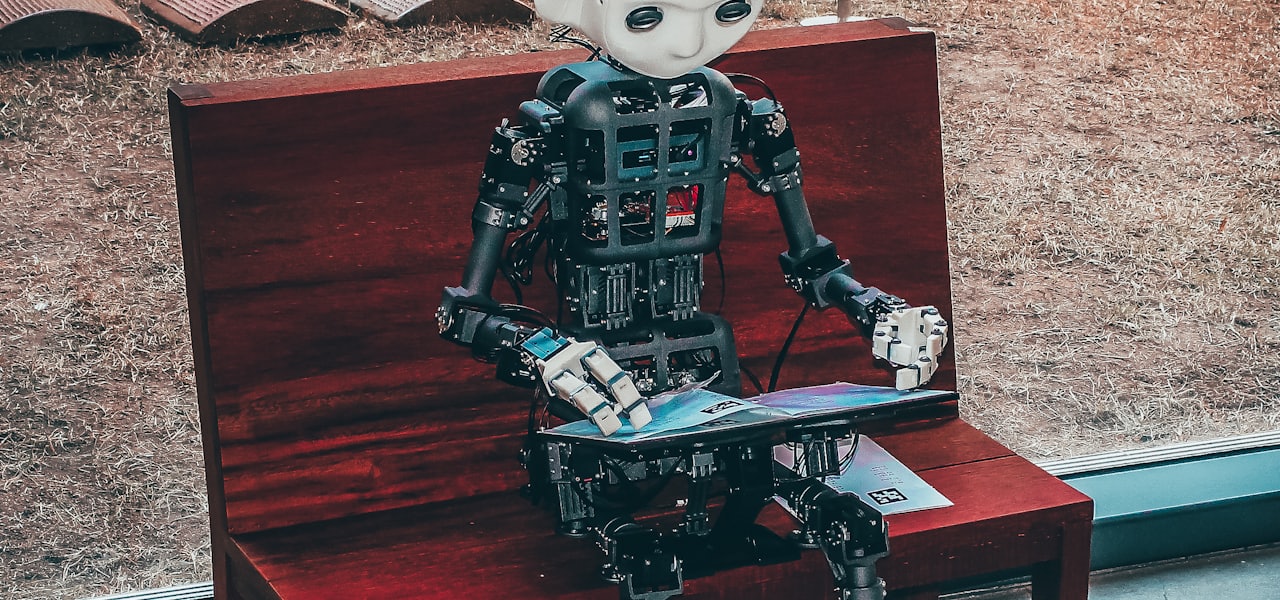
Computer Dreams is a 1988 film created by Digital Vision Entertainment and released by MPI Home Video. Written, produced and directed by Geoffrey de Valois and hosted by Amanda Pays, it consists primarily of clips and behind-the-scenes work of early computer graphics animation. Notably included are Luxo Jr. and Red's Dream, the first two short films from Pixar. The film is an hour long and features an electronic score by Music Fantastic. It was revised and re-released on DVD as The History of Computer Animation, Volume 2. It won the Winner Gold Special Jury Award at the 1989 Houston International Film Festival, and the 1989 Golden Decade Award from the US Film & Video Festival. Music used includes: Gail Lennon - Desire, Gail Lennon - Like A Dream, Shandi Sinnamon - Making It,
Feed forward (control)
A feed forward (sometimes written feedforward) is an element or pathway within a control system that passes a controlling signal from a source in its external environment to a load elsewhere in its external environment. This is often a command signal from an external operator. In control engineering, a feedforward control system is a control system that uses sensors to detect disturbances affecting the system and then applies an additional input to minimize the effect of the disturbance. This requires a mathematical model of the system so that the effect of disturbances can be properly predicted. A control system which has only feed-forward behavior responds to its control signal in a pre-defined way without responding to the way the system reacts; it is in contrast with a system that also has feedback, which adjusts the input to take account of how it affects the system, and how the system itself may vary unpredictably. In a feed-forward system, the control variable adjustment is not error-based. Instead it is based on knowledge about the process in the form of a mathematical model of the process and knowledge about, or measurements of, the process disturbances. Some prerequisites are needed for control scheme to be reliable by pure feed-forward without feedback: the external command or controlling signal must be available, and the effect of the output of the system on the load should be known (that usually means that the load must be predictably unchanging with time). Sometimes pure feed-forward control without feedback is called 'ballistic', because once a control signal has been sent, it cannot be further adjusted; any corrective adjustment must be by way of a new control signal. In contrast, 'cruise control' adjusts the output in response to the load that it encounters, by a feedback mechanism. These systems could relate to control theory, physiology, or computing. == Overview == With feed-forward or feedforward control, the disturbances are measured and accounted for before they have time to affect the system. In the house example, a feed-forward system may measure the fact that the door is opened and automatically turn on the heater before the house can get too cold. The difficulty with feed-forward control is that the effects of the disturbances on the system must be accurately predicted, and there must not be any unmeasured disturbances. For instance, if a window was opened that was not being measured, the feed-forward-controlled thermostat might let the house cool down. The term has specific meaning within the field of CPU-based automatic control. The discipline of feedforward control as it relates to modern, CPU based automatic controls is widely discussed, but is seldom practiced due to the difficulty and expense of developing or providing for the mathematical model required to facilitate this type of control. Open-loop control and feedback control, often based on canned PID control algorithms, are much more widely used. There are three types of control systems: open-loop, feed-forward, and feedback. An example of a pure open-loop control system is manual non-power-assisted steering of a motor car; the steering system does not have access to an auxiliary power source and does not respond to varying resistance to turning of the direction wheels; the driver must make that response without help from the steering system. In comparison, power steering has access to a controlled auxiliary power source, which depends on the engine speed. When the steering wheel is turned, a valve is opened which allows fluid under pressure to turn the wheels. A sensor monitors that pressure so that the valve only opens enough to cause the correct pressure to reach the wheel turning mechanism. This is feed-forward control where the output of the system, the change in direction of travel of the vehicle, plays no part in the system. See Model predictive control. If the driver is included in the system, then they do provide a feedback path by observing the direction of travel and compensating for errors by turning the steering wheel. In that case you have a feedback system, and the block labeled System in Figure(c) is a feed-forward system. In other words, systems of different types can be nested, and the overall system regarded as a black-box. Feedforward control is distinctly different from open-loop control and teleoperator systems. Feedforward control requires a mathematical model of the plant (process and/or machine being controlled) and the plant's relationship to any inputs or feedback the system might receive. Neither open-loop control nor teleoperator systems require the sophistication of a mathematical model of the physical system or plant being controlled. Control based on operator input without integral processing and interpretation through a mathematical model of the system is a teleoperator system and is not considered feedforward control. == History == Historically, the use of the term feedforward is found in works by Harold S. Black in US patent 1686792 (invented 17 March 1923) and D. M. MacKay as early as 1956. While MacKay's work is in the field of biological control theory, he speaks only of feedforward systems. MacKay does not mention feedforward control or allude to the discipline of feedforward controls. MacKay and other early writers who use the term feedforward are generally writing about theories of how human or animal brains work. Black also has US patent 2102671 invented 2 August 1927 on the technique of feedback applied to electronic systems. The discipline of feedforward controls was largely developed by professors and graduate students at Georgia Tech, MIT, Stanford and Carnegie Mellon. Feedforward is not typically hyphenated in scholarly publications. Meckl and Seering of MIT and Book and Dickerson of Georgia Tech began the development of the concepts of Feedforward Control in the mid-1970s. The discipline of Feedforward Controls was well defined in many scholarly papers, articles and books by the late 1980s. == Benefits == The benefits of feedforward control are significant and can often justify the extra cost, time and effort required to implement the technology. Control accuracy can often be improved by as much as an order of magnitude if the mathematical model is of sufficient quality and implementation of the feedforward control law is well thought out. Energy consumption by the feedforward control system and its driver is typically substantially lower than with other controls. Stability is enhanced such that the controlled device can be built of lower cost, lighter weight, springier materials while still being highly accurate and able to operate at high speeds. Other benefits of feedforward control include reduced wear and tear on equipment, lower maintenance costs, higher reliability and a substantial reduction in hysteresis. Feedforward control is often combined with feedback control to optimize performance. == Model == The mathematical model of the plant (machine, process or organism) used by the feedforward control system may be created and input by a control engineer or it may be learned by the control system. Control systems capable of learning and/or adapting their mathematical model have become more practical as microprocessor speeds have increased. The discipline of modern feedforward control was itself made possible by the invention of microprocessors. Feedforward control requires integration of the mathematical model into the control algorithm such that it is used to determine the control actions based on what is known about the state of the system being controlled. In the case of control for a lightweight, flexible robotic arm, this could be as simple as compensating between when the robot arm is carrying a payload and when it is not. The target joint angles are adjusted to place the payload in the desired position based on knowing the deflections in the arm from the mathematical model's interpretation of the disturbance caused by the payload. Systems that plan actions and then pass the plan to a different system for execution do not satisfy the above definition of feedforward control. Unless the system includes a means to detect a disturbance or receive an input and process that input through the mathematical model to determine the required modification to the control action, it is not true feedforward control. === Open system === In control theory, an open system is a feed forward system that does not have any feedback loop to control its output. In contrast, a closed system uses on a feedback loop to control the operation of the system. In an open system, the output of the system is not fed back into the input to the system for control or operation. == Applications == === Physiological feed-forward system === In physiology, feed-forward control is exemplified by the normal anticipatory regulation of heartbeat in advance of actual physical exertion by the central autonomic network. Feed-forward
Artificial intelligence
Artificial intelligence (AI) is the capability of computational systems to perform tasks typically associated with human intelligence, such as learning, reasoning, problem-solving, perception, and decision-making. It is a field of research in engineering, mathematics and computer science that develops and studies methods and software that enable machines to perceive their environment and use learning and intelligence to take actions that maximize their chances of achieving defined goals. High-profile applications of AI include advanced web search engines, chatbots, virtual assistants, autonomous vehicles, and play and analysis in strategy games (e.g., chess and Go). Since the 2020s, generative AI has become widely available to generate images, audio, and videos from text prompts. The traditional goals of AI research include learning, reasoning, knowledge representation, planning, natural language processing, and perception, as well as support for robotics. To reach these goals, AI researchers have used techniques including state space search and mathematical optimization, formal logic, artificial neural networks, and methods based on statistics, operations research, and economics. AI also draws upon psychology, linguistics, philosophy, neuroscience, and other fields. Some companies, such as OpenAI, Google DeepMind and Meta, aim to create artificial general intelligence (AGI) – AI that can complete virtually any cognitive task at least as well as a human. Artificial intelligence was founded as an academic discipline in 1956, and the field went through multiple cycles of optimism throughout its history, followed by periods of disappointment and loss of funding, known as AI winters. Funding and interest increased substantially after 2012, when graphics processing units began being used to accelerate neural networks, and deep learning outperformed previous AI techniques. This growth accelerated further after 2017 with the transformer architecture. In the 2020s, an AI boom has coincided with advances in generative AI, which allowed for the creation and modification of media. In addition to AI safety and unintended consequences and harms from the use of AI, ethical concerns, AI's long-term effects, and potential existential risks have prompted discussions of AI regulation. == Goals == The general problem of simulating (or creating) intelligence has been broken into subproblems. These consist of particular traits or capabilities that researchers expect an intelligent system to display. The traits described below have received the most attention and cover the scope of AI research. === Reasoning and problem-solving === Early researchers developed algorithms that imitated step-by-step reasoning that humans use when they solve puzzles or make logical deductions. By the late 1980s and 1990s, methods were developed for dealing with uncertain or incomplete information, employing concepts from probability and economics. Many of these algorithms are insufficient for solving large reasoning problems because they experience a "combinatorial explosion": They become exponentially slower as the problems grow. Even humans rarely use the step-by-step deduction that early AI research could model. They solve most of their problems using fast, intuitive judgments. Accurate and efficient reasoning is an unsolved problem. === Knowledge representation === Knowledge representation and knowledge engineering allow AI programs to answer questions intelligently and make deductions about real-world facts. Formal knowledge representations are used in content-based indexing and retrieval, scene interpretation, clinical decision support, knowledge discovery (mining "interesting" and actionable inferences from large databases), and other areas. A knowledge base is a body of knowledge represented in a form that can be used by a program. An ontology is the set of objects, relations, concepts, and properties used by a particular domain of knowledge. Knowledge bases need to represent things such as objects, properties, categories, and relations between objects; situations, events, states, and time; causes and effects; knowledge about knowledge (what we know about what other people know); default reasoning (things that humans assume are true until they are told differently and will remain true even when other facts are changing); and many other aspects and domains of knowledge. Among the most difficult problems in knowledge representation are the breadth of commonsense knowledge (the set of atomic facts that the average person knows is enormous); and the sub-symbolic form of most commonsense knowledge (much of what people know is not represented as "facts" or "statements" that they could express verbally). There is also the difficulty of knowledge acquisition, the problem of obtaining knowledge for AI applications. === Planning and decision-making === An "agent" is any entity (artificial or not) that perceives and takes actions in the world. A rational agent has goals or preferences and takes actions to make them happen. In automated planning, the agent has a specific goal. In automated decision-making, the agent has preferences—there are some situations it would prefer to be in, and some situations it is trying to avoid. The decision-making agent assigns a number to each situation (called the "utility") that measures how much the agent prefers it. For each possible action, it can calculate the "expected utility": the utility of all possible outcomes of the action, weighted by the probability that the outcome will occur. It can then choose the action with the maximum expected utility. In classical planning, the agent knows exactly what the effect of any action will be. In most real-world problems, however, the agent may not be certain about the situation they are in (it is "unknown" or "unobservable") and it may not know for certain what will happen after each possible action (it is not "deterministic"). It must choose an action by making a probabilistic guess and then reassess the situation to see if the action worked. Alongside thorough testing and improvement based on previous decisions, having an explanation for why the agent took certain decisions is a way to build trust, especially when the decisions have to be relied upon. In some problems, the agent's preferences may be uncertain, especially if there are other agents or humans involved. These can be learned (e.g., with inverse reinforcement learning), or the agent can seek information to improve its preferences. Information value theory can be used to weigh the value of exploratory or experimental actions. The space of possible future actions and situations is typically intractably large, so the agents must take actions and evaluate situations while being uncertain of what the outcome will be. A Markov decision process has a transition model that describes the probability that a particular action will change the state in a particular way and a reward function that supplies the utility of each state and the cost of each action. A policy associates a decision with each possible state. The policy could be calculated (e.g., by iteration), be heuristic, or it can be learned. Game theory describes the rational behavior of multiple interacting agents and is used in AI programs that make decisions that involve other agents. === Learning === Machine learning is the study of programs that can improve their performance on a given task automatically. It has been a part of AI from the beginning. There are several kinds of machine learning. Unsupervised learning analyzes a stream of data and finds patterns and makes predictions without any other guidance. Supervised learning requires labeling the training data with the expected answers, and comes in two main varieties: classification (where the program must learn to predict what category the input belongs in) and regression (where the program must deduce a numeric function based on numeric input). In reinforcement learning, the agent is rewarded for good responses and punished for bad ones. The agent learns to choose responses that are classified as "good". Transfer learning is when the knowledge gained from one problem is applied to a new problem. Deep learning is a type of machine learning that runs inputs through biologically inspired artificial neural networks for all of these types of learning. Computational learning theory can assess learners by computational complexity, by sample complexity (how much data is required), or by other notions of optimization. === Natural language processing === Natural language processing (NLP) allows programs to read, write and communicate in human languages. Specific problems include speech recognition, speech synthesis, machine translation, information extraction, information retrieval and question answering. Early work, based on Noam Chomsky's generative grammar and semantic networks, had difficulty with word-sense disambiguation unless
Reparameterization trick
The reparameterization trick (aka "reparameterization gradient estimator") is a technique used in statistical machine learning, particularly in variational inference, variational autoencoders, and stochastic optimization. It allows for the efficient computation of gradients through random variables, enabling the optimization of parametric probability models using stochastic gradient descent, and the variance reduction of estimators. It was developed in the 1980s in operations research, under the name of "pathwise gradients", or "stochastic gradients". Its use in variational inference was proposed in 2013. == Mathematics == Let z {\displaystyle z} be a random variable with distribution q ϕ ( z ) {\displaystyle q_{\phi }(z)} , where ϕ {\displaystyle \phi } is a vector containing the parameters of the distribution. === REINFORCE estimator === Consider an objective function of the form: L ( ϕ ) = E z ∼ q ϕ ( z ) [ f ( z ) ] {\displaystyle L(\phi )=\mathbb {E} _{z\sim q_{\phi }(z)}[f(z)]} Without the reparameterization trick, estimating the gradient ∇ ϕ L ( ϕ ) {\displaystyle \nabla _{\phi }L(\phi )} can be challenging, because the parameter appears in the random variable itself. In more detail, we have to statistically estimate: ∇ ϕ L ( ϕ ) = ∇ ϕ ∫ d z q ϕ ( z ) f ( z ) {\displaystyle \nabla _{\phi }L(\phi )=\nabla _{\phi }\int dz\;q_{\phi }(z)f(z)} The REINFORCE estimator, widely used in reinforcement learning and especially policy gradient, uses the following equality: ∇ ϕ L ( ϕ ) = ∫ d z q ϕ ( z ) ∇ ϕ ( ln q ϕ ( z ) ) f ( z ) = E z ∼ q ϕ ( z ) [ ∇ ϕ ( ln q ϕ ( z ) ) f ( z ) ] {\displaystyle \nabla _{\phi }L(\phi )=\int dz\;q_{\phi }(z)\nabla _{\phi }(\ln q_{\phi }(z))f(z)=\mathbb {E} _{z\sim q_{\phi }(z)}[\nabla _{\phi }(\ln q_{\phi }(z))f(z)]} This allows the gradient to be estimated: ∇ ϕ L ( ϕ ) ≈ 1 N ∑ i = 1 N ∇ ϕ ( ln q ϕ ( z i ) ) f ( z i ) {\displaystyle \nabla _{\phi }L(\phi )\approx {\frac {1}{N}}\sum _{i=1}^{N}\nabla _{\phi }(\ln q_{\phi }(z_{i}))f(z_{i})} The REINFORCE estimator has high variance, and many methods were developed to reduce its variance. === Reparameterization estimator === The reparameterization trick expresses z {\displaystyle z} as: z = g ϕ ( ϵ ) , ϵ ∼ p ( ϵ ) {\displaystyle z=g_{\phi }(\epsilon ),\quad \epsilon \sim p(\epsilon )} Here, g ϕ {\displaystyle g_{\phi }} is a deterministic function parameterized by ϕ {\displaystyle \phi } , and ϵ {\displaystyle \epsilon } is a noise variable drawn from a fixed distribution p ( ϵ ) {\displaystyle p(\epsilon )} . This gives: L ( ϕ ) = E ϵ ∼ p ( ϵ ) [ f ( g ϕ ( ϵ ) ) ] {\displaystyle L(\phi )=\mathbb {E} _{\epsilon \sim p(\epsilon )}[f(g_{\phi }(\epsilon ))]} Now, the gradient can be estimated as: ∇ ϕ L ( ϕ ) = E ϵ ∼ p ( ϵ ) [ ∇ ϕ f ( g ϕ ( ϵ ) ) ] ≈ 1 N ∑ i = 1 N ∇ ϕ f ( g ϕ ( ϵ i ) ) {\displaystyle \nabla _{\phi }L(\phi )=\mathbb {E} _{\epsilon \sim p(\epsilon )}[\nabla _{\phi }f(g_{\phi }(\epsilon ))]\approx {\frac {1}{N}}\sum _{i=1}^{N}\nabla _{\phi }f(g_{\phi }(\epsilon _{i}))} == Examples == For some common distributions, the reparameterization trick takes specific forms: Normal distribution: For z ∼ N ( μ , σ 2 ) {\displaystyle z\sim {\mathcal {N}}(\mu ,\sigma ^{2})} , we can use: z = μ + σ ϵ , ϵ ∼ N ( 0 , 1 ) {\displaystyle z=\mu +\sigma \epsilon ,\quad \epsilon \sim {\mathcal {N}}(0,1)} Exponential distribution: For z ∼ Exp ( λ ) {\displaystyle z\sim {\text{Exp}}(\lambda )} , we can use: z = − 1 λ log ( ϵ ) , ϵ ∼ Uniform ( 0 , 1 ) {\displaystyle z=-{\frac {1}{\lambda }}\log(\epsilon ),\quad \epsilon \sim {\text{Uniform}}(0,1)} Discrete distribution can be reparameterized by the Gumbel distribution (Gumbel-softmax trick or "concrete distribution") and diffusion models. In general, any distribution that is differentiable with respect to its parameters can be reparameterized by inverting the multivariable CDF function, then apply the implicit method. See for an exposition and application to the Gamma, Beta, Dirichlet, and von Mises distributions. == Applications == === Variational autoencoder === In Variational Autoencoders (VAEs), the VAE objective function, known as the Evidence Lower Bound (ELBO), is given by: ELBO ( ϕ , θ ) = E z ∼ q ϕ ( z | x ) [ log p θ ( x | z ) ] − D KL ( q ϕ ( z | x ) | | p ( z ) ) {\displaystyle {\text{ELBO}}(\phi ,\theta )=\mathbb {E} _{z\sim q_{\phi }(z|x)}[\log p_{\theta }(x|z)]-D_{\text{KL}}(q_{\phi }(z|x)||p(z))} where q ϕ ( z | x ) {\displaystyle q_{\phi }(z|x)} is the encoder (recognition model), p θ ( x | z ) {\displaystyle p_{\theta }(x|z)} is the decoder (generative model), and p ( z ) {\displaystyle p(z)} is the prior distribution over latent variables. The gradient of ELBO with respect to θ {\displaystyle \theta } is simply E z ∼ q ϕ ( z | x ) [ ∇ θ log p θ ( x | z ) ] ≈ 1 L ∑ l = 1 L ∇ θ log p θ ( x | z l ) {\displaystyle \mathbb {E} _{z\sim q_{\phi }(z|x)}[\nabla _{\theta }\log p_{\theta }(x|z)]\approx {\frac {1}{L}}\sum _{l=1}^{L}\nabla _{\theta }\log p_{\theta }(x|z_{l})} but the gradient with respect to ϕ {\displaystyle \phi } requires the trick. Express the sampling operation z ∼ q ϕ ( z | x ) {\displaystyle z\sim q_{\phi }(z|x)} as: z = μ ϕ ( x ) + σ ϕ ( x ) ⊙ ϵ , ϵ ∼ N ( 0 , I ) {\displaystyle z=\mu _{\phi }(x)+\sigma _{\phi }(x)\odot \epsilon ,\quad \epsilon \sim {\mathcal {N}}(0,I)} where μ ϕ ( x ) {\displaystyle \mu _{\phi }(x)} and σ ϕ ( x ) {\displaystyle \sigma _{\phi }(x)} are the outputs of the encoder network, and ⊙ {\displaystyle \odot } denotes element-wise multiplication. Then we have ∇ ϕ ELBO ( ϕ , θ ) = E ϵ ∼ N ( 0 , I ) [ ∇ ϕ log p θ ( x | z ) + ∇ ϕ log q ϕ ( z | x ) − ∇ ϕ log p ( z ) ] {\displaystyle \nabla _{\phi }{\text{ELBO}}(\phi ,\theta )=\mathbb {E} _{\epsilon \sim {\mathcal {N}}(0,I)}[\nabla _{\phi }\log p_{\theta }(x|z)+\nabla _{\phi }\log q_{\phi }(z|x)-\nabla _{\phi }\log p(z)]} where z = μ ϕ ( x ) + σ ϕ ( x ) ⊙ ϵ {\displaystyle z=\mu _{\phi }(x)+\sigma _{\phi }(x)\odot \epsilon } . This allows us to estimate the gradient using Monte Carlo sampling: ∇ ϕ ELBO ( ϕ , θ ) ≈ 1 L ∑ l = 1 L [ ∇ ϕ log p θ ( x | z l ) + ∇ ϕ log q ϕ ( z l | x ) − ∇ ϕ log p ( z l ) ] {\displaystyle \nabla _{\phi }{\text{ELBO}}(\phi ,\theta )\approx {\frac {1}{L}}\sum _{l=1}^{L}[\nabla _{\phi }\log p_{\theta }(x|z_{l})+\nabla _{\phi }\log q_{\phi }(z_{l}|x)-\nabla _{\phi }\log p(z_{l})]} where z l = μ ϕ ( x ) + σ ϕ ( x ) ⊙ ϵ l {\displaystyle z_{l}=\mu _{\phi }(x)+\sigma _{\phi }(x)\odot \epsilon _{l}} and ϵ l ∼ N ( 0 , I ) {\displaystyle \epsilon _{l}\sim {\mathcal {N}}(0,I)} for l = 1 , … , L {\displaystyle l=1,\ldots ,L} . This formulation enables backpropagation through the sampling process, allowing for end-to-end training of the VAE model using stochastic gradient descent or its variants. === Variational inference === More generally, the trick allows using stochastic gradient descent for variational inference. Let the variational objective (ELBO) be of the form: ELBO ( ϕ ) = E z ∼ q ϕ ( z ) [ log p ( x , z ) − log q ϕ ( z ) ] {\displaystyle {\text{ELBO}}(\phi )=\mathbb {E} _{z\sim q_{\phi }(z)}[\log p(x,z)-\log q_{\phi }(z)]} Using the reparameterization trick, we can estimate the gradient of this objective with respect to ϕ {\displaystyle \phi } : ∇ ϕ ELBO ( ϕ ) ≈ 1 L ∑ l = 1 L ∇ ϕ [ log p ( x , g ϕ ( ϵ l ) ) − log q ϕ ( g ϕ ( ϵ l ) ) ] , ϵ l ∼ p ( ϵ ) {\displaystyle \nabla _{\phi }{\text{ELBO}}(\phi )\approx {\frac {1}{L}}\sum _{l=1}^{L}\nabla _{\phi }[\log p(x,g_{\phi }(\epsilon _{l}))-\log q_{\phi }(g_{\phi }(\epsilon _{l}))],\quad \epsilon _{l}\sim p(\epsilon )} === Dropout === The reparameterization trick has been applied to reduce the variance in dropout, a regularization technique in neural networks. The original dropout can be reparameterized with Bernoulli distributions: y = ( W ⊙ ϵ ) x , ϵ i j ∼ Bernoulli ( α i j ) {\displaystyle y=(W\odot \epsilon )x,\quad \epsilon _{ij}\sim {\text{Bernoulli}}(\alpha _{ij})} where W {\displaystyle W} is the weight matrix, x {\displaystyle x} is the input, and α i j {\displaystyle \alpha _{ij}} are the (fixed) dropout rates. More generally, other distributions can be used than the Bernoulli distribution, such as the gaussian noise: y i = μ i + σ i ⊙ ϵ i , ϵ i ∼ N ( 0 , I ) {\displaystyle y_{i}=\mu _{i}+\sigma _{i}\odot \epsilon _{i},\quad \epsilon _{i}\sim {\mathcal {N}}(0,I)} where μ i = m i ⊤ x {\displaystyle \mu _{i}=\mathbf {m} _{i}^{\top }x} and σ i 2 = v i ⊤ x 2 {\displaystyle \sigma _{i}^{2}=\mathbf {v} _{i}^{\top }x^{2}} , with m i {\displaystyle \mathbf {m} _{i}} and v i {\displaystyle \mathbf {v} _{i}} being the mean and variance of the i {\displaystyle i} -th output neuron. The reparameterization trick can be applied to all such cases, resulting in the variational dropout method.
Multi-task learning
Multi-task learning (MTL) is a subfield of machine learning in which multiple learning tasks are solved at the same time, while exploiting commonalities and differences across tasks. This can result in improved learning efficiency and prediction accuracy for the task-specific models, when compared to training the models separately. Inherently, Multi-task learning is a multi-objective optimization problem having trade-offs between different tasks. Early versions of MTL were called "hints". In a widely cited 1997 paper, Rich Caruana gave the following characterization:Multitask Learning is an approach to inductive transfer that improves generalization by using the domain information contained in the training signals of related tasks as an inductive bias. It does this by learning tasks in parallel while using a shared representation; what is learned for each task can help other tasks be learned better. In the classification context, MTL aims to improve the performance of multiple classification tasks by learning them jointly. One example is a spam-filter, which can be treated as distinct but related classification tasks across different users. To make this more concrete, consider that different people have different distributions of features which distinguish spam emails from legitimate ones, for example an English speaker may find that all emails in Russian are spam, not so for Russian speakers. Yet there is a definite commonality in this classification task across users, for example one common feature might be text related to money transfer. Solving each user's spam classification problem jointly via MTL can let the solutions inform each other and improve performance. Further examples of settings for MTL include multiclass classification and multi-label classification. Multi-task learning works because regularization induced by requiring an algorithm to perform well on a related task can be superior to regularization that prevents overfitting by penalizing all complexity uniformly. One situation where MTL may be particularly helpful is if the tasks share significant commonalities and are generally slightly under sampled. However, as discussed below, MTL has also been shown to be beneficial for learning unrelated tasks. == Methods == The key challenge in multi-task learning, is how to combine learning signals from multiple tasks into a single model. This may strongly depend on how well different task agree with each other, or contradict each other. There are several ways to address this challenge: === Task grouping and overlap === Within the MTL paradigm, information can be shared across some or all of the tasks. Depending on the structure of task relatedness, one may want to share information selectively across the tasks. For example, tasks may be grouped or exist in a hierarchy, or be related according to some general metric. Suppose, as developed more formally below, that the parameter vector modeling each task is a linear combination of some underlying basis. Similarity in terms of this basis can indicate the relatedness of the tasks. For example, with sparsity, overlap of nonzero coefficients across tasks indicates commonality. A task grouping then corresponds to those tasks lying in a subspace generated by some subset of basis elements, where tasks in different groups may be disjoint or overlap arbitrarily in terms of their bases. Task relatedness can be imposed a priori or learned from the data. Hierarchical task relatedness can also be exploited implicitly without assuming a priori knowledge or learning relations explicitly. For example, the explicit learning of sample relevance across tasks can be done to guarantee the effectiveness of joint learning across multiple domains. === Exploiting unrelated tasks: Auxiliary learning === In auxiliary learning, one attempts learning a group of principal tasks using a group of auxiliary tasks, unrelated to the principal ones. With the right unrelated tasks, joint learning of unrelated tasks which use the same input data have been shown to be beneficial, and provide significant improvement over standard MTL. The reason is that prior knowledge about task relatedness can lead to sparser and more informative representations for each task grouping, essentially by screening out idiosyncrasies of the data distribution. It has been proposed to build on a prior multitask methodology by favoring a shared low-dimensional representation within each task grouping, and imposing a penalty on tasks from different groups which encourages the two representations to be orthogonal. Learning with auxiliary unrelated tasks poses two major challenges: Finding useful auxiliary tasks and combining losses of all tasks in a useful way. Some methods can learn these from data together with the training process, and combine tasks efficiently. === Transfer of knowledge === Related to multi-task learning is the concept of knowledge transfer. Whereas traditional multi-task learning implies that a shared representation is developed concurrently across tasks, transfer of knowledge implies a sequentially shared representation. Large scale machine learning projects such as the deep convolutional neural network GoogLeNet, an image-based object classifier, can develop robust representations which may be useful to further algorithms learning related tasks. For example, the pre-trained model can be used as a feature extractor to perform pre-processing for another learning algorithm. Or the pre-trained model can be used to initialize a model with similar architecture which is then fine-tuned to learn a different classification task. === Multiple non-stationary tasks === Traditionally Multi-task learning and transfer of knowledge are applied to stationary learning settings. Their extension to non-stationary environments is termed Group online adaptive learning (GOAL). Sharing information could be particularly useful if learners operate in continuously changing environments, because a learner could benefit from previous experience of another learner to quickly adapt to their new environment. Such group-adaptive learning has numerous applications, from predicting financial time-series, through content recommendation systems, to visual understanding for adaptive autonomous agents. === Multi-task optimization === Multi-task optimization focuses on solving optimizing the whole process. The paradigm has been inspired by the well-established concepts of transfer learning and multi-task learning in predictive analytics. The key motivation behind multi-task optimization is that if optimization tasks are related to each other in terms of their optimal solutions or the general characteristics of their function landscapes, the search progress can be transferred to substantially accelerate the search on the other. The success of the paradigm is not necessarily limited to one-way knowledge transfers from simpler to more complex tasks. In practice an attempt is to intentionally solve a more difficult task that may unintentionally solve several smaller problems. There is a direct relationship between multitask optimization and multi-objective optimization. In some cases, the simultaneous training of seemingly related tasks may hinder performance compared to single-task models. Commonly, MTL models employ task-specific modules on top of a joint feature representation obtained using a shared module. Since this joint representation must capture useful features across all tasks, MTL may hinder individual task performance if the different tasks seek conflicting representation, i.e., the gradients of different tasks point to opposing directions or differ significantly in magnitude. This phenomenon is commonly referred to as negative transfer. To mitigate this issue, various MTL optimization methods have been proposed. It has been reported that meta-knowledge transfer could help avoid negative transfer.Besides, the per-task gradients are combined into a joint update direction through various aggregation algorithms or heuristics. There are several common approaches for multi-task optimization: Bayesian optimization, evolutionary computation, and approaches based on Game theory. ==== Multi-task Bayesian optimization ==== Multi-task Bayesian optimization is a modern model-based approach that leverages the concept of knowledge transfer to speed up the automatic hyperparameter optimization process of machine learning algorithms. The method builds a multi-task Gaussian process model on the data originating from different searches progressing in tandem. The captured inter-task dependencies are thereafter utilized to better inform the subsequent sampling of candidate solutions in respective search spaces. ==== Evolutionary multi-tasking ==== Evolutionary multi-tasking has been explored as a means of exploiting the implicit parallelism of population-based search algorithms to simultaneously progress multiple distinct optimization tasks. By mapping all task
Behavior informatics
Behavior informatics (BI) is the informatics of behaviors so as to obtain behavior intelligence and behavior insights. BI is a research method combining science and technology, specifically in the area of engineering. The purpose of BI includes analysis of current behaviors as well as the inference of future possible behaviors. This occurs through pattern recognition. Different from applied behavior analysis from the psychological perspective, BI builds computational theories, systems and tools to qualitatively and quantitatively model, represent, analyze, and manage behaviors of individuals, groups and/or organizations. BI is built on classic study of behavioral science, including behavior modeling, applied behavior analysis, behavior analysis, behavioral economics, and organizational behavior. Typical BI tasks consist of individual and group behavior formation, representation, computational modeling, analysis, learning, simulation, and understanding of behavior impact, utility, non-occurring behaviors, etc. for behavior intervention and management. The Behavior Informatics approach to data utilizes cognitive as well as behavioral data. By combining the data, BI has the potential to effectively illustrate the big picture when it comes to behavioral decisions and patterns. One of the goals of BI is also to be able to study human behavior while eliminating issues like self-report bias. This creates more reliable and valid information for research studies. == Behavior == From an Informatics perspective, a behavior consists of three key elements: actors (behavioral subjects and objects), operations (actions, activities) and interactions (relationships), and their properties. A behavior can be represented as a behavior vector, all behaviors of an actor or an actor group can be represented as behavior sequences and multi-dimensional behavior matrix. The following table explains some of the elements of behavior. Behavior Informatics takes into account behavior when analyzing business patterns and intelligence. The inclusion of behavior in these analyses provides prominent information on social and driving factors of patterns. == Applications == Behavior Informatics is being used in a variety of settings, including but not limited to health care management, telecommunications, marketing, and security. Behavior Informatics provides a manner in which to analyze and organize the many aspects that go into a person's health care needs and decisions. When it comes to business models, behavior informatics may be utilized for a similar role. Organizations implement behavior informatics to enhance business structure and regime, where it helps moderate ideal business decisions and situations.
Similarity learning
Similarity learning is an area of supervised machine learning in artificial intelligence. It is closely related to regression and classification, but the goal is to learn a similarity function that measures how similar or related two objects are. It has applications in ranking, in recommendation systems, visual identity tracking, face verification, and speaker verification. == Learning setup == There are four common setups for similarity and metric distance learning. Regression similarity learning In this setup, pairs of objects are given ( x i 1 , x i 2 ) {\displaystyle (x_{i}^{1},x_{i}^{2})} together with a measure of their similarity y i ∈ R {\displaystyle y_{i}\in R} . The goal is to learn a function that approximates f ( x i 1 , x i 2 ) ∼ y i {\displaystyle f(x_{i}^{1},x_{i}^{2})\sim y_{i}} for every new labeled triplet example ( x i 1 , x i 2 , y i ) {\displaystyle (x_{i}^{1},x_{i}^{2},y_{i})} . This is typically achieved by minimizing a regularized loss min W ∑ i l o s s ( w ; x i 1 , x i 2 , y i ) + r e g ( w ) {\displaystyle \min _{W}\sum _{i}loss(w;x_{i}^{1},x_{i}^{2},y_{i})+reg(w)} . Classification similarity learning Given are pairs of similar objects ( x i , x i + ) {\displaystyle (x_{i},x_{i}^{+})} and non similar objects ( x i , x i − ) {\displaystyle (x_{i},x_{i}^{-})} . An equivalent formulation is that every pair ( x i 1 , x i 2 ) {\displaystyle (x_{i}^{1},x_{i}^{2})} is given together with a binary label y i ∈ { 0 , 1 } {\displaystyle y_{i}\in \{0,1\}} that determines if the two objects are similar or not. The goal is again to learn a classifier that can decide if a new pair of objects is similar or not. Ranking similarity learning Given are triplets of objects ( x i , x i + , x i − ) {\displaystyle (x_{i},x_{i}^{+},x_{i}^{-})} whose relative similarity obey a predefined order: x i {\displaystyle x_{i}} is known to be more similar to x i + {\displaystyle x_{i}^{+}} than to x i − {\displaystyle x_{i}^{-}} . The goal is to learn a function f {\displaystyle f} such that for any new triplet of objects ( x , x + , x − ) {\displaystyle (x,x^{+},x^{-})} , it obeys f ( x , x + ) > f ( x , x − ) {\displaystyle f(x,x^{+})>f(x,x^{-})} (contrastive learning). This setup assumes a weaker form of supervision than in regression, because instead of providing an exact measure of similarity, one only has to provide the relative order of similarity. For this reason, ranking-based similarity learning is easier to apply in real large-scale applications. Locality sensitive hashing (LSH) Hashes input items so that similar items map to the same "buckets" in memory with high probability (the number of buckets being much smaller than the universe of possible input items). It is often applied in nearest neighbor search on large-scale high-dimensional data, e.g., image databases, document collections, time-series databases, and genome databases. A common approach for learning similarity is to model the similarity function as a bilinear form. For example, in the case of ranking similarity learning, one aims to learn a matrix W that parametrizes the similarity function f W ( x , z ) = x T W z {\displaystyle f_{W}(x,z)=x^{T}Wz} . When data is abundant, a common approach is to learn a siamese network – a deep network model with parameter sharing. == Metric learning == Similarity learning is closely related to distance metric learning. Metric learning is the task of learning a distance function over objects. A metric or distance function has to obey four axioms: non-negativity, identity of indiscernibles, symmetry and subadditivity (or the triangle inequality). In practice, metric learning algorithms ignore the condition of identity of indiscernibles and learn a pseudo-metric. When the objects x i {\displaystyle x_{i}} are vectors in R d {\displaystyle R^{d}} , then any matrix W {\displaystyle W} in the symmetric positive semi-definite cone S + d {\displaystyle S_{+}^{d}} defines a distance pseudo-metric of the space of x through the form D W ( x 1 , x 2 ) 2 = ( x 1 − x 2 ) ⊤ W ( x 1 − x 2 ) {\displaystyle D_{W}(x_{1},x_{2})^{2}=(x_{1}-x_{2})^{\top }W(x_{1}-x_{2})} . When W {\displaystyle W} is a symmetric positive definite matrix, D W {\displaystyle D_{W}} is a metric. Moreover, as any symmetric positive semi-definite matrix W ∈ S + d {\displaystyle W\in S_{+}^{d}} can be decomposed as W = L ⊤ L {\displaystyle W=L^{\top }L} where L ∈ R e × d {\displaystyle L\in R^{e\times d}} and e ≥ r a n k ( W ) {\displaystyle e\geq rank(W)} , the distance function D W {\displaystyle D_{W}} can be rewritten equivalently D W ( x 1 , x 2 ) 2 = ( x 1 − x 2 ) ⊤ L ⊤ L ( x 1 − x 2 ) = ‖ L ( x 1 − x 2 ) ‖ 2 2 {\displaystyle D_{W}(x_{1},x_{2})^{2}=(x_{1}-x_{2})^{\top }L^{\top }L(x_{1}-x_{2})=\|L(x_{1}-x_{2})\|_{2}^{2}} . The distance D W ( x 1 , x 2 ) 2 = ‖ x 1 ′ − x 2 ′ ‖ 2 2 {\displaystyle D_{W}(x_{1},x_{2})^{2}=\|x_{1}'-x_{2}'\|_{2}^{2}} corresponds to the Euclidean distance between the transformed feature vectors x 1 ′ = L x 1 {\displaystyle x_{1}'=Lx_{1}} and x 2 ′ = L x 2 {\displaystyle x_{2}'=Lx_{2}} . Many formulations for metric learning have been proposed. Some well-known approaches for metric learning include learning from relative comparisons, which is based on the triplet loss, large margin nearest neighbor, and information theoretic metric learning (ITML). In statistics, the covariance matrix of the data is sometimes used to define a distance metric called Mahalanobis distance. == Applications == Similarity learning is used in information retrieval for learning to rank, in face verification or face identification, and in recommendation systems. Also, many machine learning approaches rely on some metric. This includes unsupervised learning such as clustering, which groups together close or similar objects. It also includes supervised approaches like K-nearest neighbor algorithm which rely on labels of nearby objects to decide on the label of a new object. Metric learning has been proposed as a preprocessing step for many of these approaches. == Scalability == Metric and similarity learning scale quadratically with the dimension of the input space, as can easily see when the learned metric has a bilinear form f W ( x , z ) = x T W z {\displaystyle f_{W}(x,z)=x^{T}Wz} . Scaling to higher dimensions can be achieved by enforcing a sparseness structure over the matrix model, as done with HDSL, and with COMET. == Software == metric-learn is a free software Python library which offers efficient implementations of several supervised and weakly-supervised similarity and metric learning algorithms. The API of metric-learn is compatible with scikit-learn. OpenMetricLearning is a Python framework to train and validate the models producing high-quality embeddings. == Further information == For further information on this topic, see the surveys on metric and similarity learning by Bellet et al. and Kulis.